
Home Assistant Voice in 2026: Local vs Cloud, and What the Reviews Measured
What Home Assistant Voice actually is, the real local vs cloud tradeoff with measured latency, and the archived component the guides still teach.

Researched with AI assistance, reviewed and edited by Tapabrata Biswas.
In this article
- 01What is Home Assistant Voice?
- 02What you get for $69
- 03The choice that actually matters: local or cloud
- 04"Fully local" needs a real computer
- 05The component the guides still get wrong
- 06What it can and can't do, honestly
- 07Whether it makes sense in an Indian home
- 08What this post does not cover
- 09Sources
37 percent. That's the accuracy one reviewer measured for Home Assistant's fully local voice on the same set of commands where the cloud version scored 58 percent. The local one was faster, though. This is the entire Home Assistant Voice decision in two numbers, and almost nothing written about the product states it that bluntly.
This covers Home Assistant Voice: the Assist software and the Voice Preview Edition hardware, and the local voice pipeline behind them. If you're trying to decide whether to plug a full conversational AI like ChatGPT or Gemini into Home Assistant, that's a related but different question, covered in plugging a full AI model into Home Assistant. This piece is about the voice layer itself.
What is Home Assistant Voice?
Home Assistant Voice is the local voice control system for Home Assistant, made of two parts that people constantly mix up. Assist is the software, the built-in assistant that turns your speech into smart-home actions. The Home Assistant Voice Preview Edition is the hardware, a dedicated speaker built to run it.
You don't need the hardware to use the software. Assist runs in the Home Assistant phone app, on a $13 ESP32 speaker like the ATOM Echo, or on anything you build with ESPHome. The Voice Preview Edition just gives it a proper microphone array and a physical home.
The point of all of it is one thing: voice control that can run entirely on your own hardware, with no always-on microphone streaming to a company's servers. That's the pitch, and whether it delivers depends almost entirely on the local-versus-cloud choice below.
What you get for $69
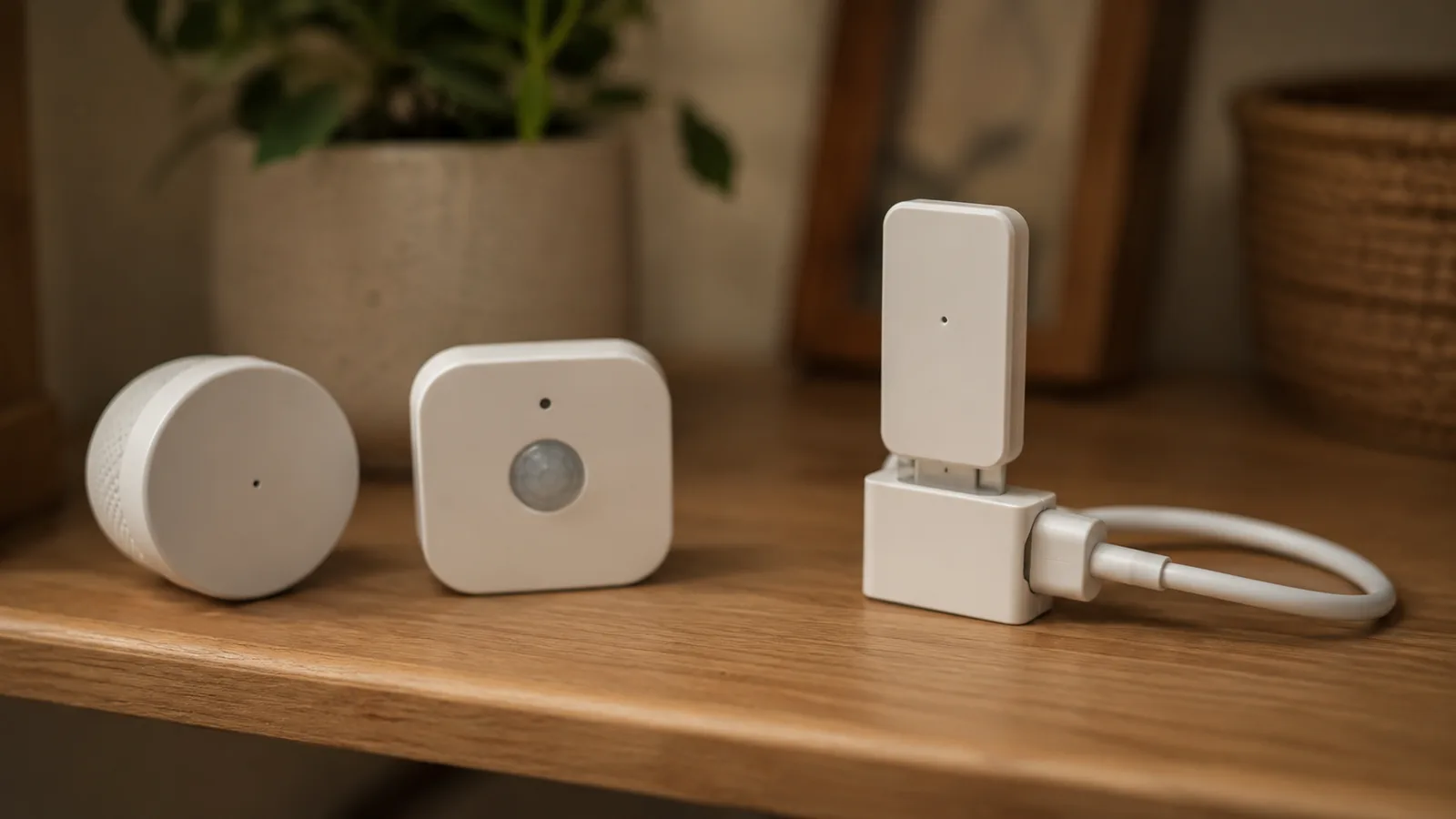
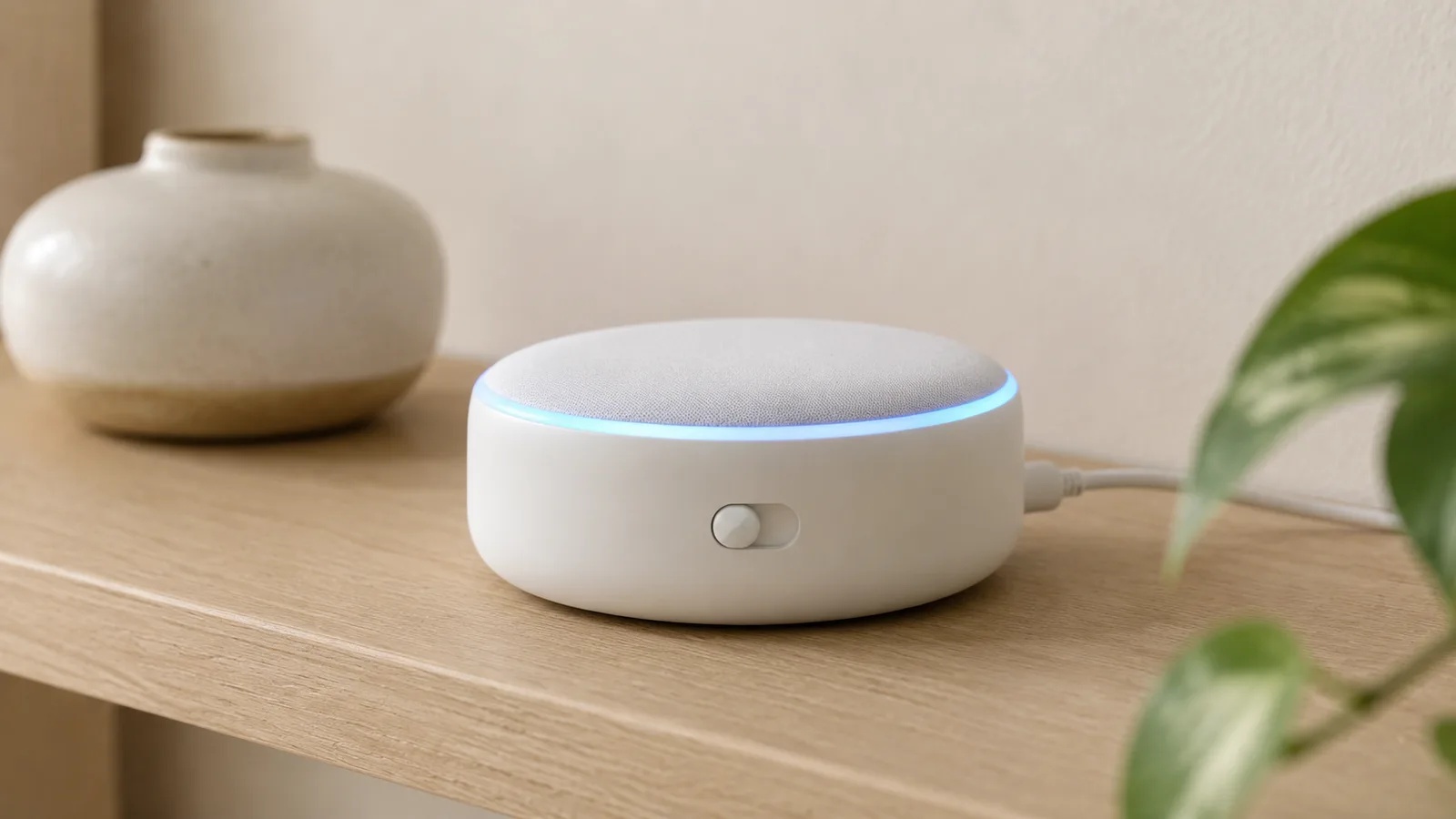
The Home Assistant Voice Preview Edition is a $69 (€59) speaker puck built specifically for Assist, and the box deliberately leaves out the USB-C cable.
Nabu Casa, the company behind Home Assistant, left the cable and charger out on the assumption that you already own a drawer full of them. Agree or not, it's an honest reason rather than a cost-cut dressed up as a feature.
The hardware itself is more considered than the price suggests:
- A dual-microphone array with an XMOS XU316 chip doing echo cancellation and noise removal on the device, before anything reaches the network
- A physical switch that cuts power to the microphones, not a software mute. When it's off, the mics are electrically dead
- A rotary volume dial, a multicolour LED ring you can drive from automations, and a 3.5mm audio jack with its own DAC
- An ESP32-S3 inside, running ESPHome, fully open source and documented down to the circuit board files
The mic-kill switch is the detail worth pausing on. Every mainstream smart speaker asks you to trust that "mute" means muted. This one removes the question by cutting the power.
The choice that actually matters: local or cloud
Local processing keeps everything on your hardware and is usually faster, while cloud processing is more accurate but adds latency and a subscription. This one decision shapes the whole experience, and unlike most of what surrounds this product, it's been measured.
Three independent reviewers ran the numbers rather than guessing:
| Reviewer | Local response | Cloud response | Accuracy noted |
|---|---|---|---|
| Michael Sleen, Jan 2025 | 3.89 sec average | 5.21 sec average | Local 37%, cloud 58%, same 19 prompts |
| Smart Home Solver, Feb 2025 | 4 to 5 sec on a Pi, ~1 sec on strong hardware | not stated | slower hardware is the bottleneck |
| Matter Alpha, Oct 2025 | 5 to 10+ sec | prompt | called local latency the main frustration |

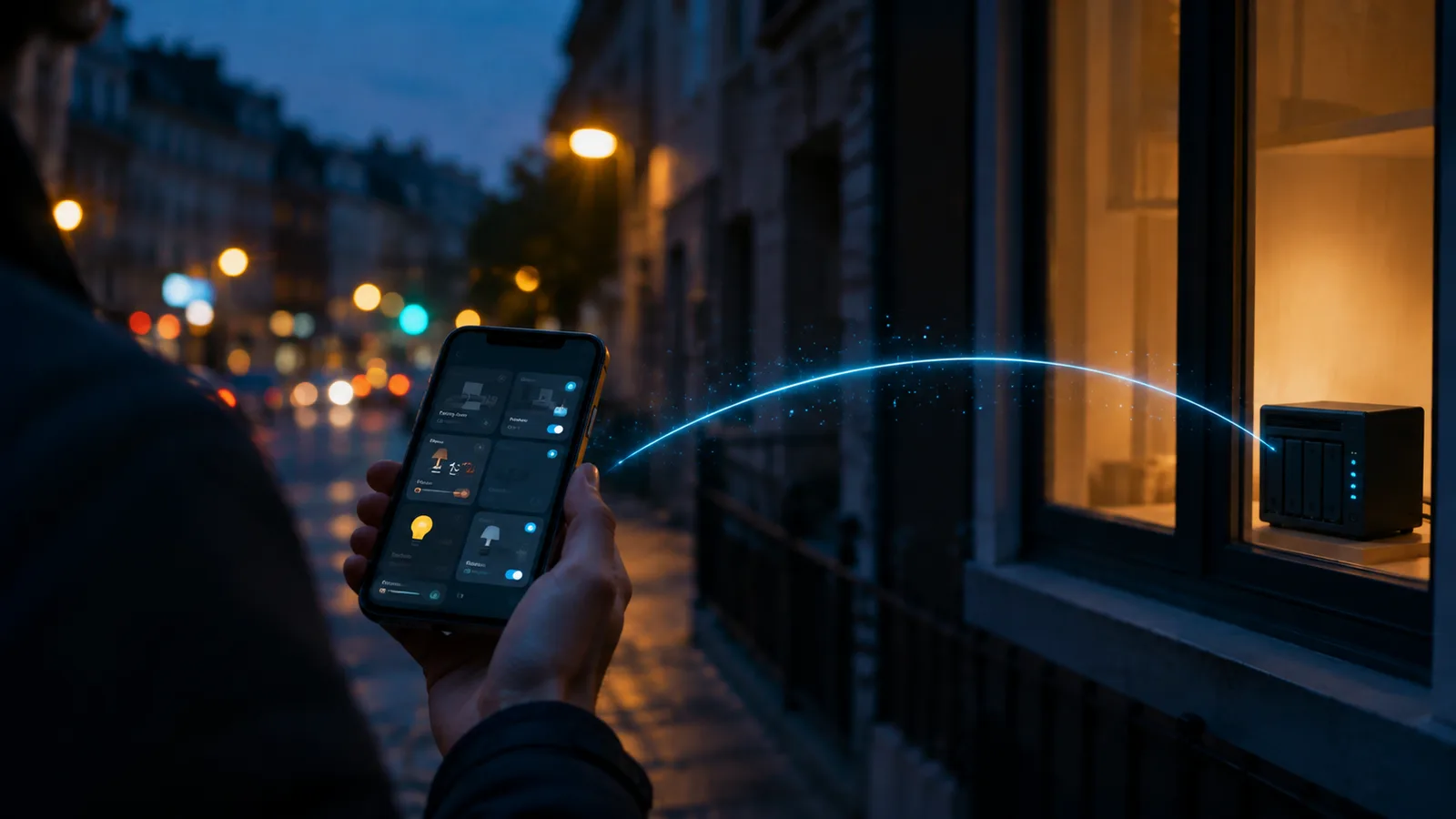
One path keeps everything close and quick. The other reaches further but travels more to get there. The sign is blank because you're the one choosing.
Read those together and the honest summary falls out. Local is faster to respond but understands fewer of your commands. Cloud understands more but waits on the round trip and needs a Home Assistant Cloud subscription. Neither is simply better, which is exactly what the marketing on all sides avoids saying.
The accuracy gap is the part to take seriously. A voice assistant that mishears one command in three isn't a latency problem you can hardware your way out of, it's a daily friction. If voice control has to feel effortless for your household to actually use it, cloud is the honest recommendation, privacy trade included.
"Fully local" needs a real computer
Running the whole pipeline on your own hardware requires at least an Intel N100 class mini PC, not a Raspberry Pi. This is the requirement the privacy pitch tends to skip.
Home Assistant's own documentation recommends at least an N100 processor for fully local speech recognition with the Whisper engine, because Whisper takes around 8 seconds on a Raspberry Pi 4 and under a second on stronger hardware. Eight seconds to transcribe "turn off the kitchen light" is not usable. The reviewer who measured the good local numbers above was running a Beelink N100 mini PC with 16GB of RAM, not a Pi.
There is a lighter path, and it's the one most people should probably take:
Focused Local mode uses an engine called Speech-to-Phrase instead of Whisper. It only understands a fixed set of home-control phrases, so it can't add to a shopping list or answer a question, but it runs those phrases in under a second even on a Raspberry Pi 4 or a Home Assistant Green. For "lights, plugs, timers, and nothing clever," it's genuinely fast and genuinely local.
That gives three tiers, not two, which is the framing Home Assistant introduced and almost no guide uses:
| Tier | Engine | Hardware | Handles |
|---|---|---|---|
| Focused Local | Speech-to-Phrase | Raspberry Pi 4 / HA Green | Fixed home-control commands, fast |
| Full Local | Whisper | Intel N100 or better | Open speech, private |
| Cloud | HA Cloud | Any | Open speech, most accurate |
Most households want Focused Local for daily control and reach for Cloud only when they need real conversation.
The component the guides still get wrong
Piper, the text-to-speech engine that nearly every local-voice tutorial tells you to install, was archived on 6 October 2025 and is no longer developed.
It still works. It's still available as a Home Assistant Wyoming add-on, and for an existing setup there's no emergency. But it's read-only on GitHub now, and guides published in 2026 that present it as the current, actively maintained choice are quietly out of date. For a new build, the forward options being pointed to are Kokoro and Coqui XTTS.
This is worth flagging for one reason beyond Piper itself: this stack moves, and a voice tutorial written eighteen months ago can hand you an archived component with total confidence. Check the date on any local-voice guide before you follow it, and check whether the pieces it names are still maintained.
What it can and can't do, honestly
Home Assistant Voice reliably controls devices and manages timers and lists, but it is not a general-knowledge assistant and it's fussy about phrasing.
What works, across every review: turning lights, plugs, fans, and thermostats on and off, running timers, adding to shopping lists, and triggering scenes. You can also trigger automations by voice, which is where it starts to feel genuinely yours rather than a worse Alexa.
Where it frustrates people, and every reviewer hit the same three:
- Phrasing is rigid, and one reviewer put it as: deviate from the formula, and it likely won't understand. Alexa forgives a lot of sloppy wording; Assist forgives less.
- It has no general knowledge, so it can't tell you the capital of France or make whale sounds. It controls your house, that's the job.
- Music is weak, and multiple reviewers struggled to get reliable playback, and the built-in speaker isn't built for it anyway.
One review is worth citing as a caution rather than a verdict: the Matter Alpha tester had all four of their units enter a red-light error state after roughly a month, with no automatic recovery. One reviewer, one batch, so not a pattern to state as fact, but "Preview Edition" is in the name for a reason, and the software is moving faster than the hardware.
Whether it makes sense in an Indian home
Local voice is a more realistic Alexa alternative in India than the English-language reviews suggest, because language support has quietly widened.
Home Assistant's Voice chapter 10 update expanded Speech-to-Phrase to 21 languages including Hindi, and Piper's text-to-speech added Malayalam and Nepali among others. Support varies by tier, so a language might work for fixed local commands while still needing the cloud for open conversation, but the English-only assumption baked into most coverage is simply out of date.
The privacy argument also lands harder here. An always-on cloud microphone in a multi-generational household is a different proposition from one in a single-occupant flat, and the physical mic-kill switch is a concrete answer rather than a policy promise. Against that, the honest cost note: Full Local wants an N100 mini PC, which is a larger outlay than a budget smart speaker, so Focused Local on hardware you already run is the sensible starting point. Running control locally is also part of where local control saves money over the long run.
What this post does not cover
This covers Home Assistant Voice as a voice-control layer: the Assist software, the Voice Preview Edition hardware, and the local pipeline. It doesn't rank smart speakers against each other, and it doesn't re-run the comparison of full conversational AI models for the home, which lives in plugging a full AI model into Home Assistant.
If Home Assistant itself isn't set up yet, start with getting Home Assistant running first. Building your own ESPHome satellite, wiring a custom Whisper server, and training custom wake words are all out of scope here.
Prices and language support were accurate as of July 2026 and change with new releases; nothing here is a recommendation to buy a specific device.
Sources
- Home Assistant Voice Preview Edition, Home Assistant
- Assist, talk to your smart home, Home Assistant
- Set up a fully local voice assistant, Home Assistant documentation
- Voice chapter 10, Home Assistant, 25 June 2025
- Home Assistant Voice Preview Edition review, Matter Alpha, 25 October 2025
Frequently asked questions

Written by
Tapabrata Biswas
Tech Researcher
I test AI productivity tools and research home-automation gear the way most people use them. Not in a lab, but on an ordinary desk with an ordinary internet connection. The only test that matters: does it save you time?
Share the Post with Your Besties
Get the plain-English tech brief
One email a week on AI tools and smart-home tech. No jargon, no hype.