
How Home Automation Actually Saves Energy (and Where It Doesn't)
Home automation can trim your energy bill, but the wins are specific. What smart thermostats, plugs, and monitoring really save, and where it stops.

Researched with AI assistance, reviewed and edited by Tapabrata Biswas.
In this article
- 01Where the energy savings come from
- 02The biggest win is the thermostat
- 03Heating water, the load people forget
- 04Smart plugs and the vampire-power problem
- 05Lighting, sensors, and the smaller wins
- 06The honest ranking: what saves, and how much
- 07Where home automation does not save energy
- 08What this means for your bill
- 09What this post does not cover
- 10Sources
A smart home full of glowing gadgets does not automatically use less power. Some of it uses more. The energy savings are real, but they come from a few specific places, and the flashy parts are rarely where the money is.
Up to $183 a year. That is what standby power alone, the electricity your devices burn while idle, can cost a typical household, according to the U.S. Department of Energy. Home automation's best trick is quietly clawing some of that back, along with a slice of your heating and cooling bill. Knowing which automations pay off, and which just add another thing drawing power, is the difference between a smaller bill and a more expensive hobby.
Where the energy savings come from
A home energy management system is a setup that monitors your home's energy-using devices, like the thermostat, lights, and plugs, and adjusts them automatically to cut waste. That is the engine behind any real saving, whether you build it with Home Assistant or a few standalone smart devices, many of which now speak Matter so they work across brands.
The real savings come down to three things a person forgets to do: turn the heating down, switch idle devices off, and stop lighting empty rooms. Automation just does them without being asked. Everything else a smart home offers is comfort and convenience, which is fine, but it isn't energy saving, and the marketing is happy to blur the two.
The biggest win is the thermostat
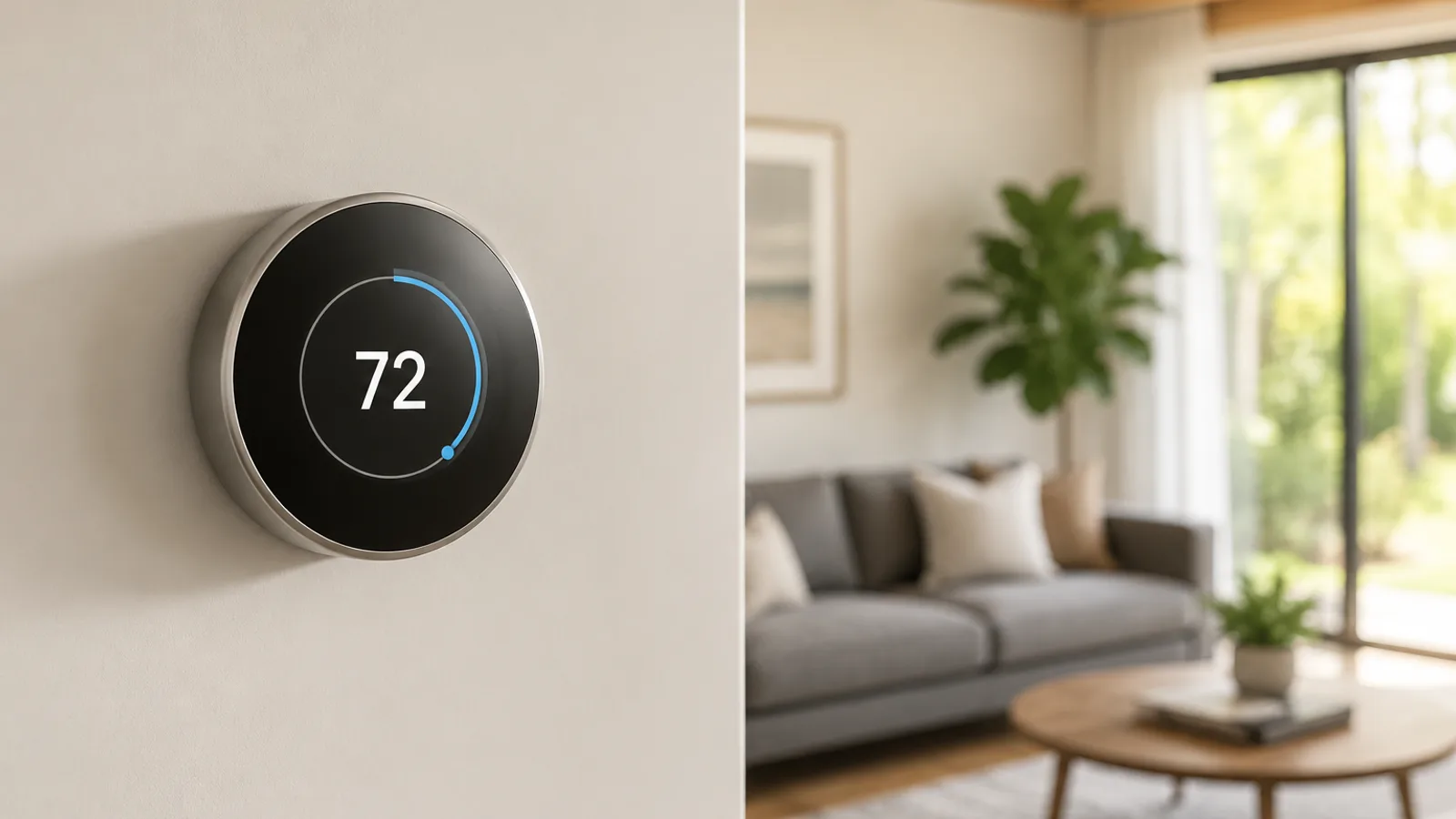
The smart thermostat is the single home-automation device most likely to lower your bill, because it automates your largest energy expense: heating and cooling. ENERGY STAR-certified smart thermostats cut heating and cooling use by about 8 percent, or roughly $50 a year, according to ENERGY STAR, and the Department of Energy estimates an optimised schedule can reach up to 10 percent.
The mechanism is dull and effective. The thermostat learns when the house is empty or everyone is asleep, then eases off heating and cooling during those hours, so you're not paying to keep an empty house at 21 degrees. Real savings swing widely, from around 5 percent to over 20 percent, depending on your climate, your old habits, and how leaky your house is. Someone who already turned the heat down by hand saves little. Someone who never touched the dial saves the most. Put it in dollars: a household spending $1,200 a year on heating and cooling saves roughly $96 to $120 at the 8 to 10 percent range, and more in a harsh climate where the system runs harder. The thermostat earns its price back in a year or two, then keeps paying. If you're choosing one, our guide to the best smart thermostat compares the main 2026 models.
Heating water, the load people forget
Water heating is the second-largest energy use in a typical home, around 18 percent of the bill, according to the U.S. Department of Energy, and it runs whether anyone needs hot water or not. Automating it is less common than a smart thermostat but follows the same logic: a smart controller or timer can stop the tank reheating through the night or while the house sits empty for the workday, then bring it back up before the first shower. The saving depends on how wasteful the old schedule was, but reheating a full tank around the clock for a house that draws on it twice a day is exactly the waste automation is good at trimming. Pair that schedule with an efficient heat-pump water heater and the two compound.
Smart plugs and the vampire-power problem
Standby power is the electricity a device draws while switched off but still plugged in, and it adds up to 5 to 10 percent of a typical home's electricity use, according to the U.S. Department of Energy. Lawrence Berkeley National Laboratory, which has tracked standby power for two decades, estimates it accounts for roughly 1 percent of global carbon emissions.
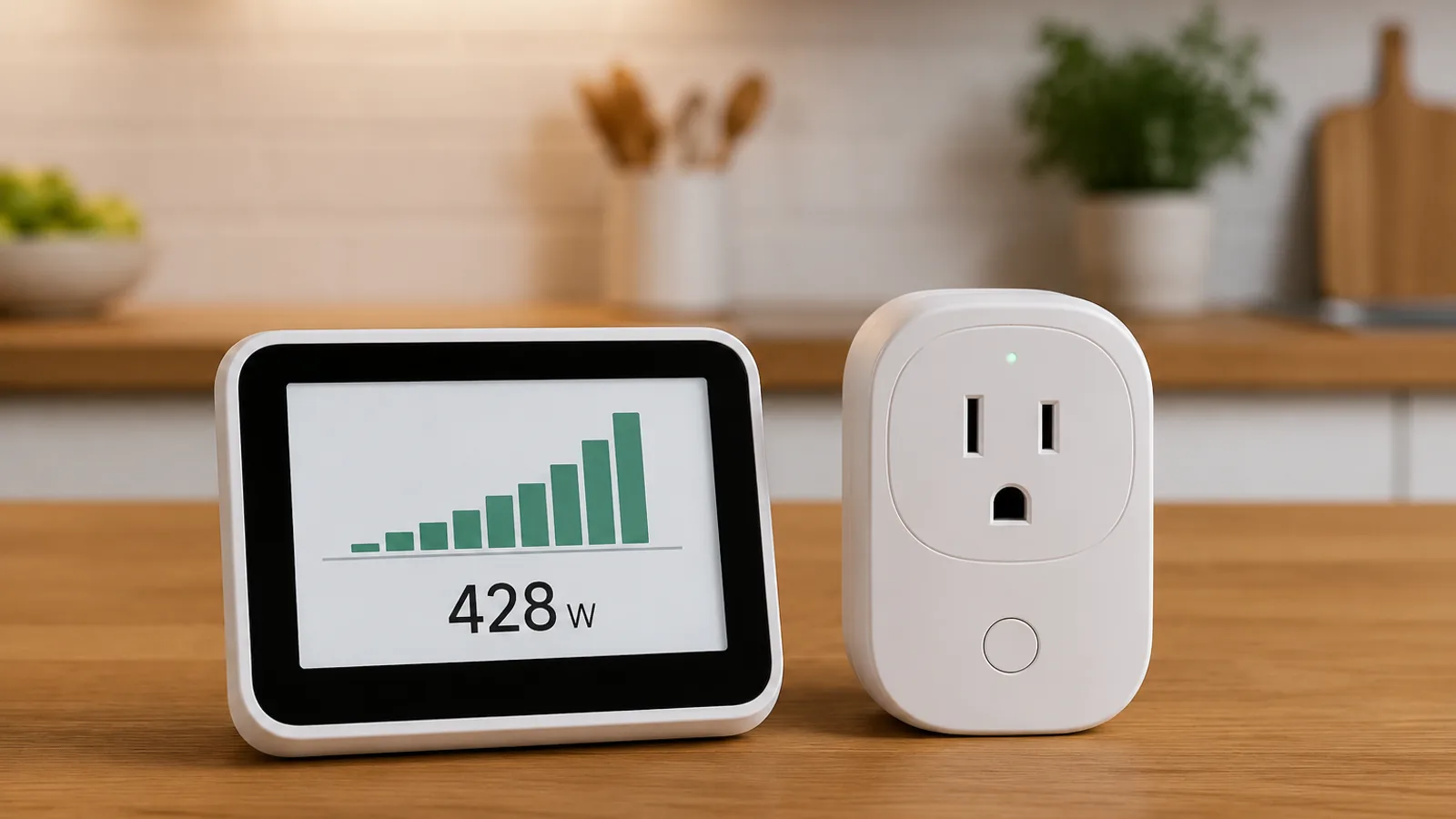
A smart plug fixes this by cutting power to a device on a schedule or when you leave, so the TV, console, soundbar, and coffee machine stop sipping power overnight. Put a number on it: if standby is 8 percent of a $1,500 annual electricity bill, that's $120 a year leaking into idle devices, and automating even half of them off overnight reclaims a real chunk. The catch is that a smart plug itself draws a little standby power, usually under a watt, so the math only works when the plug controls something thirsty, not a phone charger. If you're shopping for one, our guide to the best smart plugs compares the main 2026 picks and which models track energy use.
Lighting, sensors, and the smaller wins
Lighting savings come less from the bulb and more from the automation around it. A smart LED already uses a fraction of an old incandescent, so the real gain is motion sensors and schedules that switch lights off in empty rooms, the ones people leave lit out of habit. Pair a cheap motion sensor with a smart bulb and a hallway light that used to burn all evening now runs for the two minutes someone is in it.
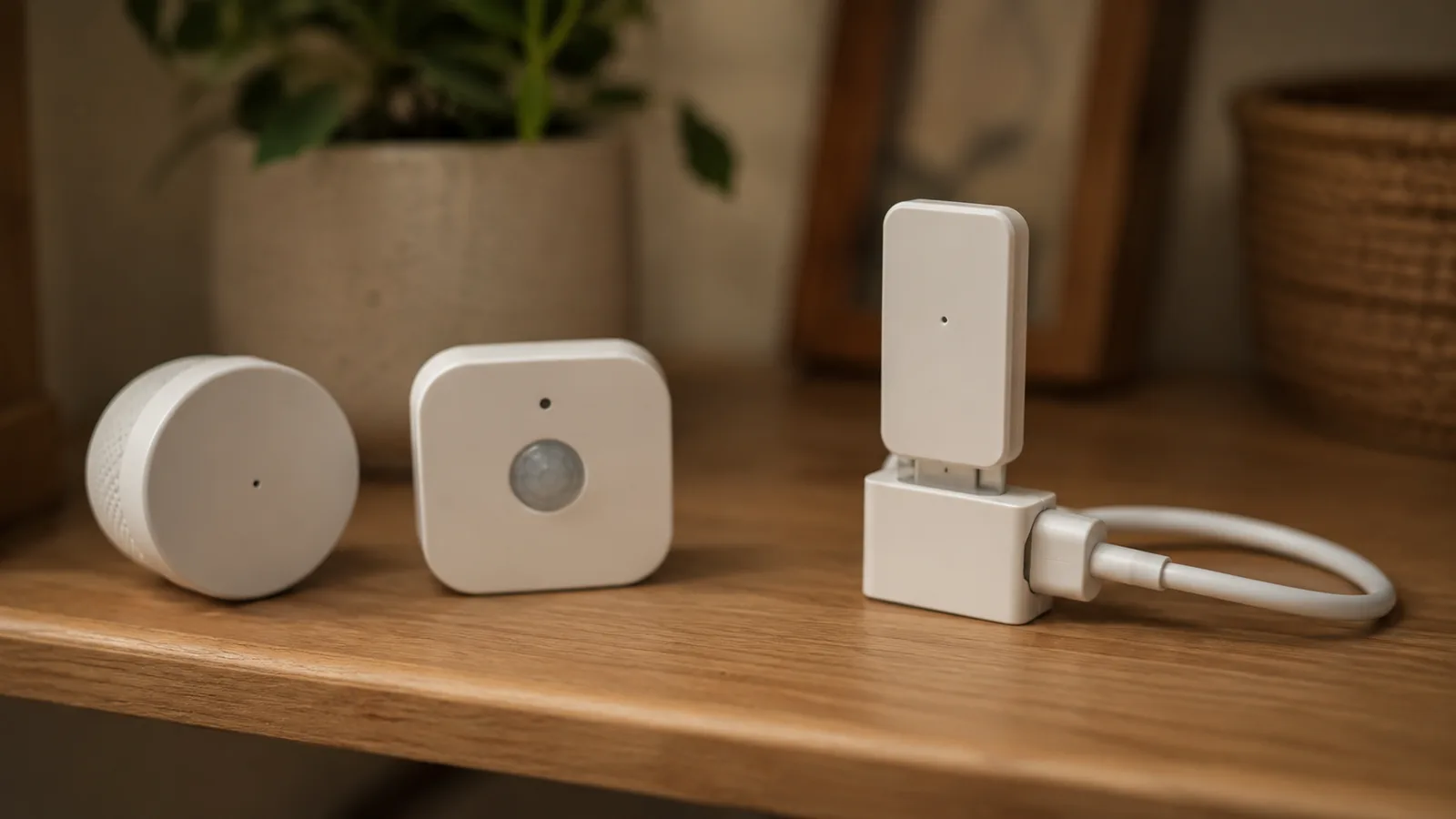
Energy monitoring is the quiet multiplier. A smart plug or whole-home monitor that shows you, in real numbers, that the old fridge in the garage costs $90 a year does more than any automation, because it changes what you decide to unplug. Most people have no idea which devices dominate their bill, and a monitor settles it with data instead of guesses. Once you can see that a single space heater or an old second fridge outweighs every smart bulb in the house combined, the next decision makes itself. The battery sensors that make all of this work, whether Zigbee or Z-Wave, sip so little power they're a rounding error on the bill.
The honest ranking: what saves, and how much
The realistic order looks like this, with the source behind each number.
| Automation | Typical annual saving | Source |
|---|---|---|
| Smart thermostat schedule | About 8 percent of heating and cooling, around $50 | ENERGY STAR |
| Cutting standby with smart plugs | A share of the 5 to 10 percent standby load | U.S. DOE |
| Motion-based lighting | Modest, depends on old habits | Behaviour-driven |
| Energy monitoring (awareness) | Indirect, often the largest in practice | Behaviour-driven |
| Whole-home system plus efficient appliances | Up to 20 to 30 percent | IEA |
That last row is the headline number you'll see quoted most, so read it carefully. The International Energy Agency's 20 to 30 percent applies to a full home energy management system paired with efficient appliances, not a couple of plugs and a smart bulb.
Where home automation does not save energy
Plenty of smart-home gear adds to your bill rather than trimming it. Always-listening smart speakers and displays draw power 24 hours a day to wait for a wake word, and a house with six of them has six small loads that never sleep. One speaker only draws a couple of watts, but a couple of watts every hour of the year is roughly 20 kilowatt-hours, a few dollars per device that never stops. A hub, a handful of Wi-Fi cameras, and a stack of plug-in bridges each add standby draw of their own. A smart power strip that cuts a whole device group on a schedule is the cleanest fix, since it removes the draw at night instead of just measuring it.
There's also a rebound effect worth naming. Automating your lights and heating can make running them so frictionless that you use more, not less, like setting the heat to come on an hour earlier because you no longer have to think about it. And a lot of marketing quietly counts convenience as savings. A light that turns on when you walk in is lovely. It isn't saving energy unless it also turns off when you leave.
What this means for your bill
For a normal home, the realistic prize from automation is the smart thermostat saving plus a dent in standby power, which together might land somewhere around $100 to $200 a year, not the headline figure on the box. The savings depend far more on your old habits than on which brand you buy, and they shrink the moment you add always-on gadgets that never switch off. A worked total: stack the thermostat's $50, a $60 dent in standby power from scheduling the worst offenders off overnight, and a $90 second fridge you finally retired after a monitor exposed it, and you are close to $200, most of it from seeing the waste rather than automating it away.
The biggest lever isn't any single device. It's the visibility automation gives you, the moment a monitor shows that one forgotten appliance costs more than your entire lighting setup. The savings follow the thing you finally decide to switch off. To put a number on it, our energy savings calculator estimates your own yearly savings and payback, and the smart home budget calculator shows what a setup costs upfront.
What this post does not cover
- Solar panels, home batteries, and EV charging
- Specific product recommendations or smart thermostat models
- Utility rebates and time-of-use tariff optimisation
Sources
Frequently asked questions

Written by
Tapabrata Biswas
Tech Researcher
I test AI productivity tools and research home-automation gear the way most people use them. Not in a lab, but on an ordinary desk with an ordinary internet connection. The only test that matters: does it save you time?
Share the Post with Your Besties
Get the plain-English tech brief
One email a week on AI tools and smart-home tech. No jargon, no hype.