
Smart Thermostat for a Small Office: Which One, and Is It Worth It? (2026)
A smart thermostat for a small office, by HVAC type: when a consumer unit works, when you need an RTU controller, and the real savings math.

Researched with AI assistance, reviewed and edited by Tapabrata Biswas.
In this article
A smart thermostat saves the average home about 8% on heating and cooling, or roughly $50 a year, according to ENERGY STAR, and a small office can beat that because it sits empty most of the week. That's the honest ceiling on the savings, and it's the number the HVAC-contractor pages ranking for this never quite give you. What they also skip is the question that decides everything: what kind of system are you actually cooling.
This is about picking and justifying a smart thermostat for a small office or business space, not the home version. If you want the residential picks, we cover the best smart thermostats for a home separately. Prices and models here reflect August 2026 and change often, and these picks come from ENERGY STAR guidance, manufacturer specs, and independent sources, not our own lab testing, so confirm the details and your rebate before buying.
Which smart thermostat for a small office? Start with your HVAC
The right thermostat for a small office depends entirely on the heating and cooling system it controls, so identify that before you shop. A residential-style furnace and central AC, the kind in most home offices and small leased suites, takes an ordinary consumer smart thermostat. A rooftop packaged unit, common on standalone shops and older commercial buildings, needs a commercial thermostat built for it. Those two are not interchangeable, and mixing them up is the mistake that wastes the most money here.
Residential-type and rooftop package units together condition roughly 68% of commercial floor space, so most small offices fall into one of these two buckets rather than needing an exotic system. Figure out which one you have, then match the tool to it.
| Your office's HVAC | What to use | Example models | Rough cost | Watch out for |
|---|---|---|---|---|
| A residential-style furnace and central AC (most home offices and small suites) | A consumer smart thermostat | Google Nest, ecobee, Amazon Sensi Touch 2 | $100 to $250 | Needs a C-wire, or a model with an included power adapter |
| A single rooftop packaged unit (RTU), common on small standalone shops | An RTU-compatible commercial thermostat | Pelican Wireless, Honeywell, Cognition | $200 to $500 and up, often installed | Match the voltage and heat/cool stages; a $130 consumer unit won't fit |
| Several zones or multiple RTUs | A managed commercial platform | ecobee SmartBuildings, Pelican | Per-thermostat plus a platform fee | Worth having a pro spec it |
| A heat pump or ductless mini-split | A compatible smart thermostat or an IR controller | ecobee (heat pump), Sensibo or Cielo (mini-split) | $100 to $300 | Mini-splits usually need an IR controller, not a wall thermostat |
What to use
- A residential-style furnace and central AC (most home offices and small suites)
- A consumer smart thermostat
- A single rooftop packaged unit (RTU), common on small standalone shops
- An RTU-compatible commercial thermostat
- Several zones or multiple RTUs
- A managed commercial platform
- A heat pump or ductless mini-split
- A compatible smart thermostat or an IR controller
Example models
- A residential-style furnace and central AC (most home offices and small suites)
- Google Nest, ecobee, Amazon Sensi Touch 2
- A single rooftop packaged unit (RTU), common on small standalone shops
- Pelican Wireless, Honeywell, Cognition
- Several zones or multiple RTUs
- ecobee SmartBuildings, Pelican
- A heat pump or ductless mini-split
- ecobee (heat pump), Sensibo or Cielo (mini-split)
Rough cost
- A residential-style furnace and central AC (most home offices and small suites)
- $100 to $250
- A single rooftop packaged unit (RTU), common on small standalone shops
- $200 to $500 and up, often installed
- Several zones or multiple RTUs
- Per-thermostat plus a platform fee
- A heat pump or ductless mini-split
- $100 to $300
Watch out for
- A residential-style furnace and central AC (most home offices and small suites)
- Needs a C-wire, or a model with an included power adapter
- A single rooftop packaged unit (RTU), common on small standalone shops
- Match the voltage and heat/cool stages; a $130 consumer unit won't fit
- Several zones or multiple RTUs
- Worth having a pro spec it
- A heat pump or ductless mini-split
- Mini-splits usually need an IR controller, not a wall thermostat
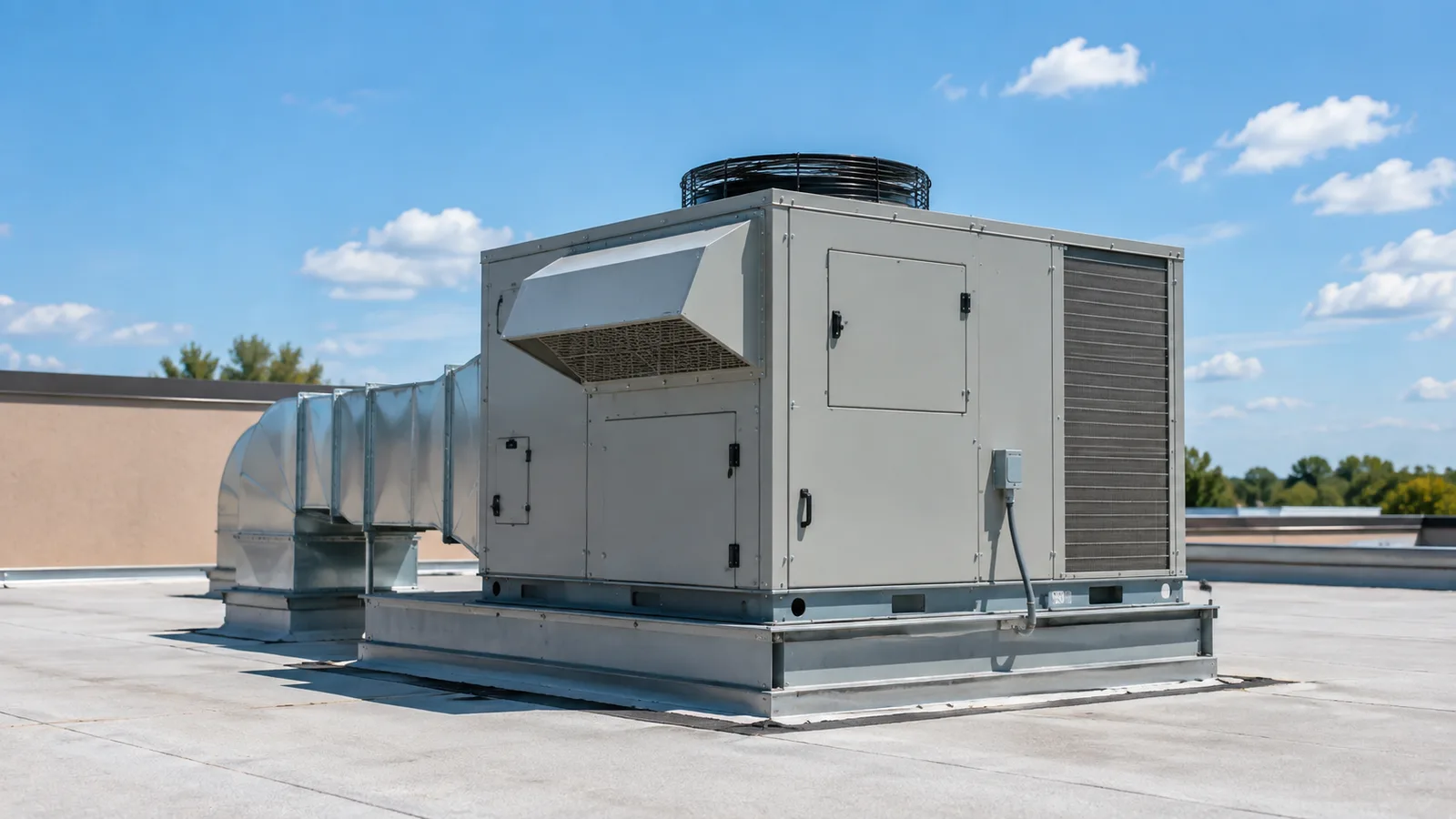
The table is the whole decision in one place. If you have a standard furnace-and-AC, a $130 Nest or ecobee is genuinely all you need, and paying for a commercial platform would be overkill. If you have an RTU, no consumer thermostat will run it properly, and trying to force one is how people end up returning hardware.
How much does it actually save?
The savings are real but modest, and honesty about that matters more than a big headline number. ENERGY STAR, which requires field data to certify, puts a smart thermostat at about 8% of heating and cooling costs, and a 2022 study of small office buildings found total-electricity savings between 8.9% and 20.4% with smart thermostat control. The spread is wide because savings depend on your climate, your rates, and how empty the building sits.
That last factor is why an office often beats a home. A small office is unoccupied for around 128 of the week's 168 hours once you count nights and weekends, so an aggressive setback schedule, letting the temperature drift when nobody's there, has far more idle time to work with than a lived-in house does. The savings come from the schedule, not the gadget.
The C-wire trap, and how to check in two minutes
Before you buy anything, check whether your thermostat wiring has a C-wire, because most smart thermostats need one. A C-wire, or common wire, supplies steady power instead of the thermostat siphoning it from the heat and cool signals, which is what causes the dreaded short-cycling and dropped-Wi-Fi problems on older setups. Plenty of office wiring, especially in older buildings, never included one.
Not having a C-wire isn't a dead end. Some models ship an adapter, ecobee includes a Power Extender Kit, and a few run without one, but it narrows your options. The two-minute check: pop the faceplate off your current thermostat and look for a wire connected to the terminal labeled C. If it's there, any model works. If it isn't, filter for thermostats that include an adapter before you order.
Check your utility rebate before you pay full price
The step that most small offices skip is the cheapest one: check your utility's rebate. Many power companies run commercial smart-thermostat rebate or incentive programs that can knock a large chunk off the price, sometimes most of it, precisely because getting businesses onto smart schedules reduces peak demand. Programs from utilities like Energy Trust of Oregon and EnergizeCT are typical, and plenty of regions have their own.
Search your utility's name plus "commercial thermostat rebate" before you buy, and check whether the rebate requires a specific model or an approved installer, because some do. Factoring that in, the payback on a compatible system usually lands around one to three years, and the rebate can pull it toward the low end. It's the same "check the boring details first" logic behind working out whether smart plugs save money for your desk.
When it's worth it, and when it isn't
A smart thermostat is worth it for most small offices with a compatible system, and the reasons go beyond the energy math. The remote control alone earns its keep the first time you fix a setting you left wrong from your phone on a Sunday, and the schedule quietly stops you conditioning an empty office all weekend. Add a utility rebate and the case is easy.
It's a weaker case in two situations. If your space is genuinely occupied around the clock, there's little idle time for setbacks to save anything. And if you have a commercial RTU system that needs a $400-plus controller and a professional install, the payback stretches out and you should price it properly first. This is one line item in a larger picture, and it sits naturally alongside the rest of a budget-tiered smart office build.
What this post does not cover
This is a guide to choosing and justifying a smart thermostat for a small office, not a home buyer's guide (see the best smart thermostats for a home for that) and not a deep commercial HVAC controls manual for large multi-zone buildings. It also isn't installation or electrical advice: if you're unsure about your wiring, voltage, or system staging, have an HVAC professional confirm compatibility before you buy or wire anything.
Thermostat models, prices, rebate programs, and compatibility all change quickly, so treat the specifics here as current to August 2026 and confirm your system type, your wiring, and your utility's rebate before you spend.
Sources
- Smart Thermostats, ENERGY STAR (the ~8% heating-and-cooling savings figure and C-wire guidance)
- Estimating electricity saving-potential in small offices, 2022 study (8.9% to 20.4% total-electricity savings in small office buildings)
- How small businesses can save on AC using smart thermostats, kW Engineering (residential-type vs rooftop-unit share of commercial buildings)
Frequently asked questions

Written by
Tapabrata Biswas
Tech Researcher
I test AI productivity tools and research home-automation gear the way most people use them. Not in a lab, but on an ordinary desk with an ordinary internet connection. The only test that matters: does it save you time?
Share the Post with Your Besties
Get the plain-English tech brief
One email a week on AI tools and smart-home tech. No jargon, no hype.