
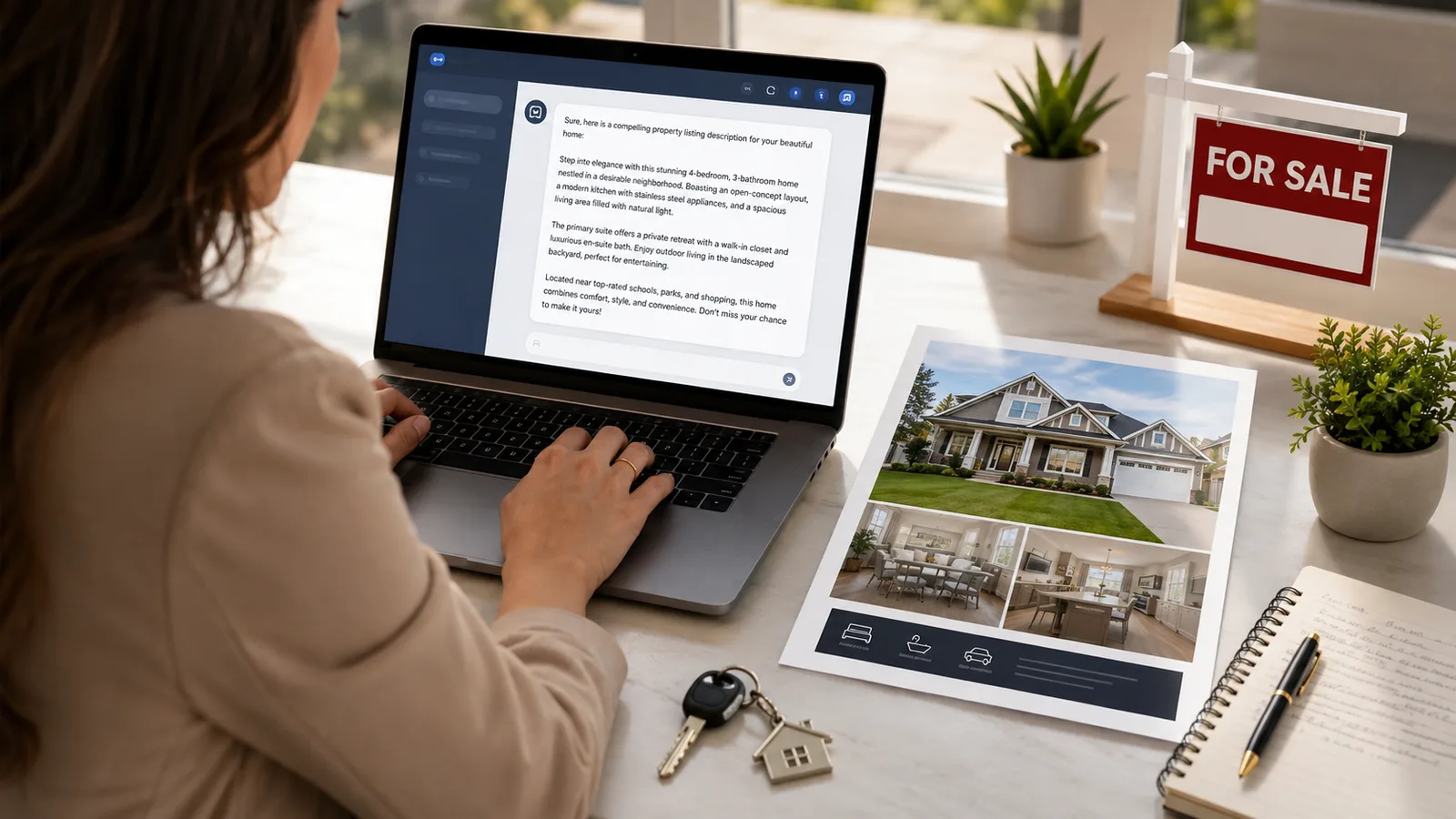
ChatGPT Prompts for Real Estate Agents: 34 for Listings, Leads & Follow-Up (2026)
34 copy-ready ChatGPT prompts for real estate agents: listings, lead follow-up, social posts, market updates, and the compliance traps to avoid.

Researched with AI assistance, reviewed and edited by Tapabrata Biswas.
In this article
- 01How to prompt as an agent
- 02Listing descriptions
- 03Social media and content
- 04Lead generation and prospecting
- 05Follow-up and nurture
- 06Market updates and pricing
- 07Objection handling and negotiation
- 08Open houses and client communication
- 09Where ChatGPT can get you in trouble
- 10What this post does not cover
- 11Sources
Most real estate prompt packs hand you a template about a three-bed in a made-up town and leave the hard part to you. The trouble is that a generic prompt gives you generic copy, and a generic listing is the fastest way to make a great home sound like every other one. The prompts below work the other way round. Each has a clear job, a place to drop the real property or client, and an output format you can use, so you get a draft that is close to ready rather than a template you still have to rewrite.
They cover the jobs that actually eat an agent's week, from listings and leads through to follow-up and market updates, and they work the same in ChatGPT, Claude, or Gemini. There is also a section on the compliance traps that are specific to real estate, because that is the part these lists almost always skip, and it is the part that can cost you.
How to prompt as an agent
A prompt that saves you time and one that wastes it differ by four things: role, context, task, and format. Tell the model who to be, give it the real details it can't see, say exactly what you want, and specify how the answer should be shaped. Leave the context out and it fills the gap with invention, which is the same issue behind writing a clearer prompt anywhere.
Here is the difference. The vague version:
Write a listing description for a house.
And the version that actually helps, with the real details and a format:
Act as a real estate copywriter. Write a listing for this home. Area: [neighbourhood, city]. Price: [price]. Details: [beds, baths, square footage, lot]. Standout features: [list]. Target buyer: [first-time buyer, family, downsizer]. Give me two versions: a formal MLS description around 150 words, and a casual social caption around 40 words. Describe only the property, not the type of person who should live there.
The first gives you filler. The second gives you copy you can almost paste. Every prompt below is written in that second style, and the habit that matters most is replacing the brackets with your real details before you hit enter.
Listing descriptions
Listing copy is the number-one use for a reason: it is repetitive, it is high-volume, and it is exactly the kind of writing a good prompt does in seconds. The trick is to feed it the real features and ask for platform-specific versions, then read every draft for the compliance lines covered later. Sell the home, not a lifestyle you can't verify.
Act as a real estate copywriter. Write an MLS listing description, around 150 words, for this property: [address or area], [price], [beds/baths/sqft], key features [list], recent updates [list]. Lead with the single best feature, keep it warm but factual, and end with one line about the location. Describe the property only, never the likely buyer.
Rewrite this listing for three places, keeping the facts identical: [paste listing]. A formal MLS version (150 words), an Instagram caption (under 50 words with a hook and three hashtags), and a one-line text I can send to buyers on my list. Keep every number the same across all three.
Turn these rough notes into a polished listing: [paste bullet notes]. If any important detail is missing (square footage, year built, HOA, parking), list it as a question at the end instead of guessing or inventing it.
Write a listing description for a hard-to-sell feature. The property has [the drawback, e.g. small kitchen, busy road, dated bathroom]. Describe it honestly and positively without hiding it or overselling, and suggest one staging or framing tip that would help buyers see past it.
Write a luxury listing description for [property details] aimed at a high-end buyer. Elevated but not overwrought, focused on craftsmanship, materials, and the feel of the space. Around 180 words, no clichés like 'dream home' or 'must see'.
Social media and content
Act as a real estate content creator. Give me a week of social posts about [topic, e.g. a new listing, a market update, a first-time-buyer tip]. Five posts, each with a hook, three or four lines of value, a call to action, and platform note (Instagram, Facebook, or LinkedIn). Keep my voice friendly and local, not salesy.
Write five Instagram captions for a just-listed post at [property/area/price]. Vary the angle: one on the standout feature, one on the neighbourhood, one on the lifestyle, one asking a question, one with light urgency. Each under 50 words with three relevant hashtags.
Draft a short video script (about 45 seconds) for a walkthrough reel of [property]. A hook in the first three seconds, three features to point out in order, and a closing call to action. Write it as spoken lines with quick shot suggestions in brackets.
Give me ten content ideas for a real estate agent in [city/area] targeting [audience, e.g. first-time buyers]. Mix educational, local, and behind-the-scenes ideas, and for each add a one-line hook I could open with.
Draft a monthly email newsletter for my past clients and leads in [area]. Include a short personal intro, one local market note, one featured listing or tip, and a light community update. Warm and skimmable, around 200 words, with a subject line.
Lead generation and prospecting
Prospecting is where a script has to feel like a person, not a pitch, so treat these as drafts to warm up rather than send cold. The value is getting past the blank page on the outreach you keep avoiding, then adding the specific detail, a recent sale, a neighbourhood change, a name, that makes it land.
Write a follow-up script for an online lead who enquired about [property or area] and went quiet. A first message that references their enquiry and offers something useful, two short follow-ups spaced a few days apart, and three qualifying questions to work in naturally. Friendly and low-pressure, never pushy.
Draft a message to my sphere of influence (past clients, friends, contacts) letting them know I'm helping buyers and sellers in [area] this season. Warm and personal, not a broadcast, with a soft ask to refer anyone thinking of moving. Under 120 words.
Write a letter to homeowners in [neighbourhood] where inventory is low and I have active buyers. Explain that I have buyers looking here, keep it genuine rather than gimmicky, and give one reason it might be a good time to talk. Around 120 words, no false urgency.
Draft an expired-listing outreach message for a seller whose home didn't sell. Acknowledge the frustration without blaming their last agent, offer a fresh perspective, and ask for a short call. Respectful and confident, under 100 words.
Give me a set of five text-message templates for common prospecting moments: new lead, no response after a showing, price-drop alert, checking in with a past client, and asking for a referral. Keep each under two sentences and easy to personalise.
Follow-up and nurture
Follow-up is where most deals are quietly won or lost, and it is also the first thing agents drop when they get busy. These draft the sequences and check-ins that keep a pipeline warm, but the rule still holds: personalise every one before it sends, because a nurture message that feels automated does more harm than sending nothing at all.
Write a five-email nurture sequence for a new buyer lead in [area]. Email 1 (immediate): acknowledge the enquiry and offer value. Email 2 (day 3): a useful market insight. Email 3 (day 7): a relevant listing or tip. Email 4 (day 14): a client story or FAQ. Email 5 (day 21): a soft check-in. Keep each under 150 words with a clear subject line.
Draft a re-engagement email for leads who went cold six months ago in [area]. Lead with what's changed in the market since we last spoke, keep it light and no-pressure, and end with an easy yes or no question. Under 120 words.
Write a post-closing follow-up plan for a client who just bought in [area]: a thank-you note, a 30-day check-in, and a one-year home-anniversary message. Warm and genuine, each short, and each with a light, natural moment to ask for a referral or review without being transactional.
Turn my notes from a showing into a same-day follow-up email: [paste notes on what the buyer liked and worried about]. Reference the specific things they reacted to, address one concern, and suggest a clear next step. Sound like a person who was there, not a template.
Market updates and pricing
Buyers and sellers want to feel like you know the street, not just the portal. These help you turn numbers into a readable update, but they only work if you paste real local data, because the model does not know your market and will invent figures if you let it. Never publish a number you have not checked.
Act as a real estate analyst. Turn this local data into a short monthly market update for [area]: [paste median price, days on market, inventory, and any changes]. Plain language for regular buyers and sellers, what the numbers mean for each side, and one honest takeaway. Around 200 words, no hype.
Help me explain a pricing recommendation to a seller who thinks their home is worth more. Here is the situation: [paste comps and my suggested range]. Draft a respectful, evidence-based message that walks through the comparable sales and the reasoning, and invites a conversation rather than an argument.
Write a neighbourhood guide for [area] aimed at buyers considering a move here. Cover the feel of the area, amenities, commute, and who tends to love it, based only on the facts I give you: [paste details]. If you don't have a detail, leave it out rather than inventing it.
Draft a clear explanation of [a market concept, e.g. a buyer's vs seller's market, contingencies, escrow] for a first-time buyer who is nervous and new to all of it. Friendly, jargon-free, and reassuring, in under 150 words.
Help me explain a seller net sheet in plain terms. Given these rough numbers, [paste sale price and estimated costs], walk the seller through what they'll likely walk away with and why each cost is there. Clear and reassuring, and flag that the figures are estimates to confirm, not a guarantee.
Objection handling and negotiation
Act as an experienced agent coaching me. A seller says [common objection, e.g. 'your commission is too high' or 'let's list higher and see']. Give me a calm, confident response that acknowledges their point, reframes it around their goal, and moves the conversation forward. Two or three sentences I could actually say out loud.
Help me draft a response to a lowball offer on my seller's listing at [price]. Firm but professional, keeping the door open to negotiation, and suggesting a counter strategy given [context, e.g. the home is priced fairly and has other interest]. Include the message to the other agent and my talking points for the seller.
A buyer is nervous about [interest rates / a bidding war / an inspection issue]. Draft a reassuring message that takes the worry seriously, gives them a clear way to think about it, and offers a next step, without downplaying a real risk or overpromising.
Prepare me for a listing presentation against two other agents for a seller in [area]. Anticipate the three toughest questions they'll ask, and for each give a straight answer and the one point that sets me apart, based on [my real strengths: paste].
Open houses and client communication
The last stretch, open houses and the run to closing, is all about making clients feel looked after rather than left in the dark. These handle the invites, the status updates, and the small touches, which is often the difference between a one-time client and a referral for life.
Create an open house plan for [property/area/price]: a social and email invite, a sign-in question that qualifies visitors naturally, three talking points about the home, and a same-day follow-up message for people who attended. Keep everything friendly and low-pressure.
Write a transaction update email for a client who is [under contract / waiting on inspection / clearing to close]. Explain plainly what stage we're at, what happens next, what I need from them, and roughly when. Calm and clear, so they feel looked after rather than left guessing.
Draft a warm welcome message and a simple what-to-expect outline for a brand-new client I just signed in [area, buyer or seller]. Set out the steps ahead, how I'll keep in touch, and what they can do now, so the whole thing feels less overwhelming.
Write a message asking a happy client for an online review after closing in [area]. Make it easy: thank them, mention one specific moment from their transaction, and include a simple one-line ask with a note that it only takes a minute. Genuine, never pushy, and never scripted-sounding.
Write a professional agent bio for [my name], a real estate agent in [area] who specialises in [focus]. Two versions: a short one for social profiles (about 40 words) and a longer one for my website (about 120 words). Confident and human, based only on these real facts: [paste]. Do not invent awards, numbers, or credentials.

Where ChatGPT can get you in trouble
This is the part the other prompt lists skip, and in real estate it is the part that matters most. ChatGPT is very good at the writing and completely unaware of the rules you work under, so the judgment stays yours.
Watch Fair Housing above everything. Your copy should describe the property, never the buyer or the neighbours, and the model will happily slip in language about families, safety, schools as a selling point, or the kind of person a home suits, because it reads like ordinary marketing. Cut all of it. Do not generate reviews or testimonials, since inventing them is deceptive and the FTC has already acted on fake AI-written reviews. Disclose AI-altered listing photos where your state requires it, as California does from 2026, and assume more will follow. And never trust a number or a fact it states, because it will confidently invent square footage, a comp, an HOA rule, or a school rating, and any of those reaching a client or the MLS is on you. None of this is legal advice, so follow your brokerage policy and local rules, but the safe habit is simple: it drafts, you verify, and you personalise. For the email side of this, our prompts for email writing pair well with the follow-up sequences here.
What this post does not cover
This is a working set of prompts and how to use them safely, not a course in real estate marketing or a guide to CRM and portal tools. The prompts are starting points to adapt, and they assume you will paste your own real property, client, and market details and check the output. Nothing here is legal, financial, or Fair Housing advice, and everything you publish remains your responsibility, so verify the facts and the compliance lines before anything reaches a client, a portal, or the MLS. If you are still finding your footing with prompts generally, the basics of prompting is the place to start.
Sources
- Rule on the Use of Consumer Reviews and Testimonials, US Federal Trade Commission (why AI-generated fake reviews are off-limits)
- Fair Housing Act overview, US Department of Housing and Urban Development (the advertising rules behind describing the property, not the buyer)
- Prompt engineering guide, OpenAI (the role, context, task, and format principles behind the prompts here)
Frequently asked questions

Written by
Tapabrata Biswas
Tech Researcher
I test AI productivity tools and research home-automation gear the way most people use them. Not in a lab, but on an ordinary desk with an ordinary internet connection. The only test that matters: does it save you time?
Share the Post with Your Besties
Get the plain-English tech brief
One email a week on AI tools and smart-home tech. No jargon, no hype.