
Claude Artifacts: What They Are, How to Use Them, and the AI Apps You Can Build (2026)
What Claude Artifacts are, how to create, edit, and share them, the AI apps you can build where viewers foot the bill, and the sandbox limits to know.

Researched with AI assistance, reviewed and edited by Tapabrata Biswas.

In this article
- 01What are Claude Artifacts?
- 02How do you create, edit, and share an artifact?
- 03Can you build real AI apps with Claude Artifacts?
- 04What Claude Artifacts can't do
- 05Claude Artifacts vs ChatGPT Canvas vs Gemini Canvas
- 06Claude Artifacts vs Claude Code artifacts
- 07Is Claude Artifacts free, and what are the limits?
- 08What this post does not cover
- 09Sources
Claude users have made more than 500 million artifacts since the feature launched, by Anthropic's June 2025 count. Most people still use them for the obvious job: getting a block of code or a document out of the chat and into its own window. The more interesting part, the one the feature quietly grew into over 2025 and 2026, is that you can now build a working app inside an artifact and share it so that other people's Claude accounts pay to run it, not yours.
Two clarifications before the how-to, because the search results blur them. This guide covers the consumer Artifacts feature in the Claude app, the side panel next to your chat. It isn't Claude Code artifacts, a separate developer feature from June 2026 that publishes a coding session as a web page, which I'll untangle further down. And Artifacts is Claude's take on what ChatGPT calls ChatGPT Canvas and Google calls Gemini Canvas, with one real difference: Artifacts can publish and run apps, not only edit text.
What are Claude Artifacts?
Claude Artifacts are standalone pieces of content that Claude generates in a dedicated window beside your conversation, so you can view, edit, and reuse them without digging through the chat. Anthropic launched them in preview in June 2024 and made them generally available across all plans on August 26, 2024.
Claude opens an artifact when the output is self-contained and worth keeping. Its own rule of thumb is content over roughly 15 lines that you'd likely edit, save, or share. The window can hold a code snippet in most languages, a single-page website in HTML and CSS, an SVG graphic, a Mermaid flowchart or mind map, a formatted document, or an interactive React component with working buttons and sliders. Anything that's easier to look at than to scroll past as chat text.
How do you create, edit, and share an artifact?
You create an artifact by asking for something that qualifies, and Claude opens the side panel on its own. If it doesn't, or the panel is switched off, turn it on in Settings under Capabilities, where the toggle covers code execution and file creation. From there the loop is conversational: ask for a change and Claude rewrites the artifact, saving each pass as a version you can step back through. Markdown documents are the exception. You can highlight a line, click Edit with Claude, and change just that part.
To hand it to someone else, open the artifact and click Publish. That creates a public link anyone can open, read-only, with a Remix button that drops a copy into their own Claude chat so they can change it without touching yours. Unpublish when you want it gone.
One habit is worth keeping from the start. Don't publish anything with sensitive company detail in it, because a published artifact is genuinely public and remixable by strangers, and unpublishing later doesn't guarantee nobody already copied it.
Can you build real AI apps with Claude Artifacts?
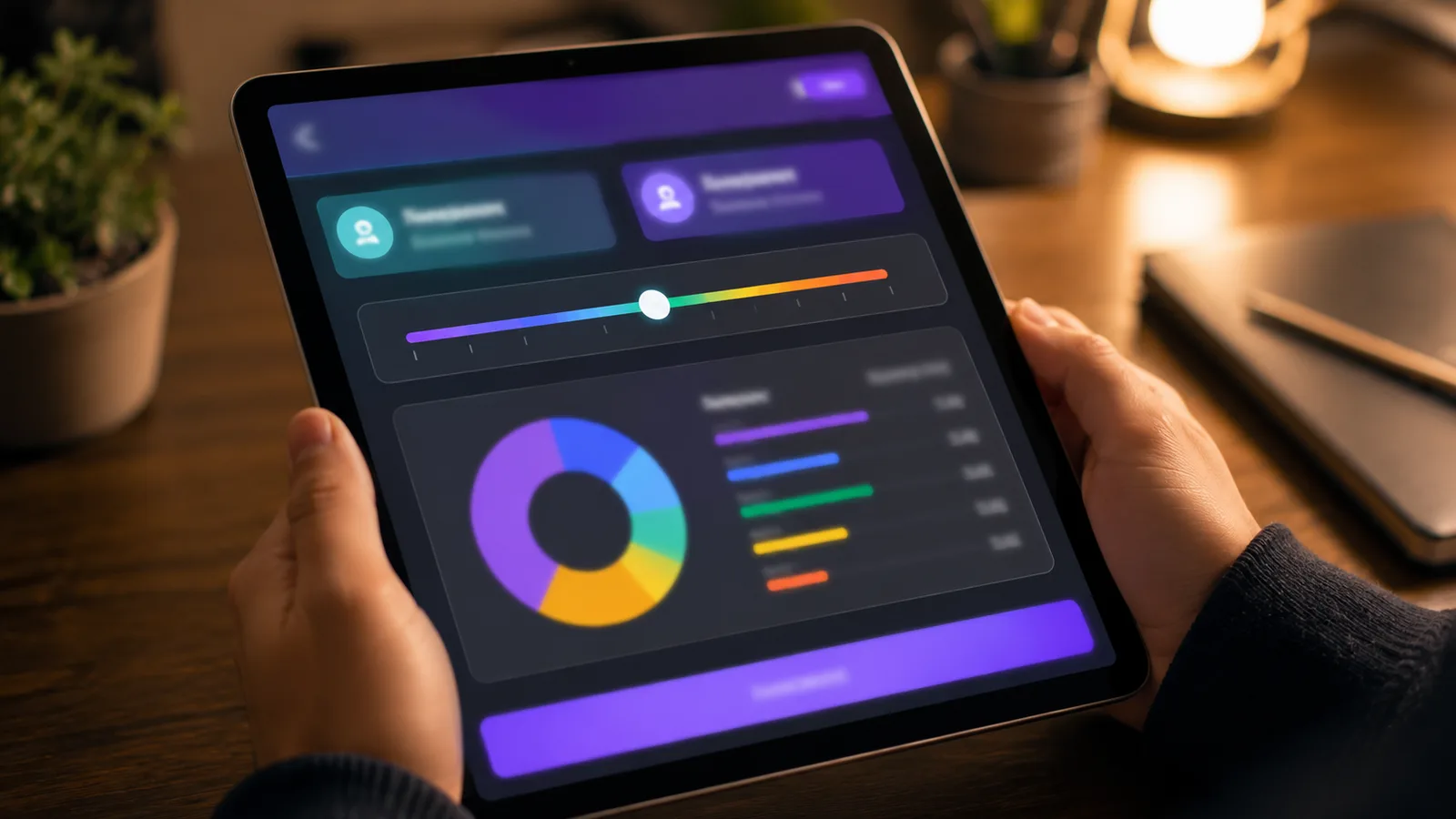
Yes, and this is the part worth understanding, because it changed what the feature is for. Since June 25, 2025, an artifact can call Claude's own model from inside itself through a browser API, which means the app you build can think, not just display. A quiz that grades free-text answers, a chatbot tuned to one topic, a tool that rewrites text on demand, all of it runs as a shareable page with no code and no server behind it.
The economics are the surprising bit. When you publish an AI-powered artifact and someone else uses it, the model usage counts against their Claude account, not yours. You can put a working AI tool in front of a few thousand people and pay nothing for the inference they run. That's a real break from every other "build an AI app" route, which bills the creator, and it's why marketers have started shipping lead-gen quizzes and ROI calculators as artifacts rather than coding them.
A concrete version helps. You could ask for a three-question skincare quiz that reads someone's answers, writes a short personalised routine, and captures an email at the end, and Claude builds the whole thing as one shareable page. The person taking it signs in with their own Claude account, which is what powers the write-up. You built a functioning tool without opening an editor or paying for a server.
Persistent storage backs this up. An artifact can save up to 20 MB of state that survives between visits, so a tracker or a saved-progress tool actually remembers where you left off. The catch: that storage only works once the artifact is published, and unpublishing deletes it permanently.
What Claude Artifacts can't do
The side panel runs in a locked-down sandbox, and the limits are specific enough to catch you out if you don't know them. An artifact can't reach the outside internet: no fetching from an external API, no loading a remote script or font, no calling your own backend. It can't use the browser's normal localStorage or sessionStorage, since the built-in persistent-storage feature replaces them. React artifacts can't use a form tag, so inputs wire up through button clicks instead. And the library versions are frozen. Three.js is pinned at r128, for one, so newer syntax fails without much explanation.
Two more honest notes from people who've pushed it. The editing is weaker than a true document editor. You mostly describe changes and let Claude rewrite, which can turn a small tweak into a full redo, and the inline visuals aren't click-editable the way ChatGPT Canvas is. A styled, interactive page also burns through output tokens fast. One reviewer testing study tools ran out mid-session on a paid plan and had to wait two hours to continue. None of this makes Artifacts weak. It makes it a place to prototype and share, not a production host.
Claude Artifacts vs ChatGPT Canvas vs Gemini Canvas
All three open a side panel so the AI's output sits in an editable space instead of scrolling away in the chat. The differences show up the moment you want to do more than write.
| What you want to do | Claude Artifacts | ChatGPT Canvas | Gemini Canvas |
|---|---|---|---|
| Edit the text by hand | Limited; you mostly ask Claude to change it | Yes, click and type, plus tone and length tools | Yes, inline editing |
| Build an interactive app or tool | Yes, React, HTML, and live controls | No, writing and code editing only | Limited, documents and code |
| Publish to a public web link | Yes, one click, viewers can remix it | No, you export and share the file | No, exports to Google Docs, Slides, or Colab |
| Build a working AI app to share | Yes, viewers' own Claude account pays for it | No | No |
| Cost to start | Free plan included | Free plan included | Free plan included |
Claude Artifacts
- Edit the text by hand
- Limited; you mostly ask Claude to change it
- Build an interactive app or tool
- Yes, React, HTML, and live controls
- Publish to a public web link
- Yes, one click, viewers can remix it
- Build a working AI app to share
- Yes, viewers' own Claude account pays for it
- Cost to start
- Free plan included
ChatGPT Canvas
- Edit the text by hand
- Yes, click and type, plus tone and length tools
- Build an interactive app or tool
- No, writing and code editing only
- Publish to a public web link
- No, you export and share the file
- Build a working AI app to share
- No
- Cost to start
- Free plan included
Gemini Canvas
- Edit the text by hand
- Yes, inline editing
- Build an interactive app or tool
- Limited, documents and code
- Publish to a public web link
- No, exports to Google Docs, Slides, or Colab
- Build a working AI app to share
- No
- Cost to start
- Free plan included
The short version: if the job is careful writing with hands-on editing, ChatGPT Canvas or Gemini Canvas give you finer manual control, and Gemini's export straight into Google Docs or Slides saves a step. If the job is building something interactive and putting it in front of other people, Artifacts is the only one of the three that publishes a live, remixable app. For the fuller feature-by-feature read, our ChatGPT vs Claude comparison covers where each assistant pulls ahead.
Claude Artifacts vs Claude Code artifacts
These two share a name and almost nothing else. Claude Code artifacts are a developer feature that launched in beta on June 18, 2026, turning a full coding session into a private, live web page on claude.ai, built from your actual codebase and connected tools. They're limited to Pro, Max, Team, and Enterprise plans, need the Claude Code CLI signed in, and render as static pages with no backend, capped at 16 MiB.
The consumer Artifacts in this guide come out of a normal chat and can run interactive, AI-powered apps. Claude Code artifacts come out of a coding session and are built for review: a reviewer walking through a pull request, a dashboard of deploy failures, an investigation timeline that fills in as the work runs. If you're not working in a terminal, the feature you want is the chat one.
Is Claude Artifacts free, and what are the limits?
Claude Artifacts is free to start. Basic artifacts, meaning creating, editing, and remixing, work on the free plan, and the feature ships on Pro, Max, Team, and Enterprise too. The advanced pieces are where paid tiers matter: persistent storage and the heavier AI-powered app features lean on paid plans, and the AI-app builder runs on desktop and web rather than mobile.
Beyond plans, the practical ceiling is tokens. Building and iterating on a rich, interactive artifact uses far more of your usage allowance than a plain chat answer, so a long design session can hit your limit sooner than you'd expect. As with every AI feature in 2026, the exact boundaries move, so check Anthropic's own page before you count on a specific number.
What this post does not cover
This is a plain-English guide to the consumer Artifacts feature in the Claude app, not a developer manual for the artifacts API, the Claude Code version, or the enterprise admin controls. It isn't a security review of publishing, so treat any public link as genuinely public and remixable. Plans, storage caps, and which features are free change often, so confirm the current details in Claude or Anthropic's help pages before you rely on them. And like anything Claude generates, an artifact can contain confident mistakes, so check what it builds before you put it in front of anyone. For where Artifacts fits among your wider kit, our roundup of other AI tools sets the context.
Sources
Frequently asked questions

Written by
Tapabrata Biswas
Tech Researcher
I test AI productivity tools and research home-automation gear the way most people use them. Not in a lab, but on an ordinary desk with an ordinary internet connection. The only test that matters: does it save you time?
Share the Post with Your Besties
Get the plain-English tech brief
One email a week on AI tools and smart-home tech. No jargon, no hype.